
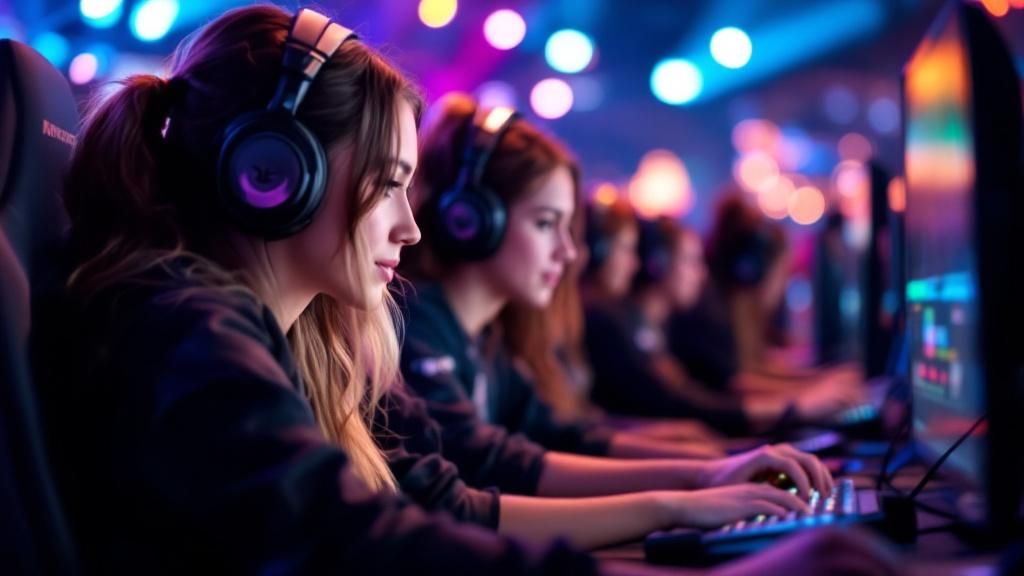
The esports industry, traditionally controlled by male players and audiences, is witnessing a significant transformation. Female gamers are increasingly shattering stereotypes and claiming their rightful place at the top tiers of competition, from prestigious tournaments to major sponsorship opportunities. This article examines how women are breaking through the glass ceiling in professional gaming, investigating the barriers they’ve overcome, the trailblazing competitors driving this movement, and what their success means for the future of competitive esports worldwide.
Rising Profile of Women in Competitive Esports
The environment of esports competition has undergone a substantial change over the last ten years. Female players have increasingly shown exceptional skill and drive, gaining recognition in competitions that were traditionally viewed as exclusively male territories. This change indicates larger transformations within the competitive gaming world, where ability and results are growing in value above sex. Leading esports companies now purposefully engage women players, recognising both the business opportunity and the untapped reservoir of esports ability that women constitute in the industry.
Statistical findings underscores this increasing visibility. Recent studies indicate that women now constitute approximately 30 to 40 per cent of the global gaming population, yet their participation in professional esports remains significantly lower. However, this disparity is narrowing rapidly. Events showcasing female players have attracted record viewership, demonstrating strong audience demand for diverse competitive gaming content. Sponsorship investments in female teams have grown significantly, indicating that big organisations acknowledge the market value and cultural importance of supporting women in esports.
The visibility of successful female gamers has created a significant wave of change across the gaming sector. Young women now have tangible role models to aspire towards, substantially shifting perceptions about gaming as a viable career path. Content streaming services have boosted women’s representation, enabling skilled competitors to build substantial followings independently. This opening up of content creation has allowed women to bypass traditional gatekeepers and position themselves as influential figures within the esports ecosystem, inspiring the future wave of female competitors.
Structural changes within major esports franchises have further accelerated women’s advancement. A number of leading organisations have created women-focused squads, invested in comprehensive training facilities, and implemented mentorship programmes specifically designed to nurture up-and-coming players. These institutional commitments demonstrate clear acknowledgement that inclusive practices enhance competitive gaming. Additionally, regulatory authorities have started introducing policies supporting inclusion, ensuring that tournaments provide equitable opportunities for female participation and equitable pay.
Despite substantial progress, challenges persist within the esports landscape. Online abuse and hostile conduct continue affecting female players unfairly, establishing unwelcoming spaces that inhibit engagement. Nevertheless, the collective determination of female gamers, coupled with growing sector backing, suggests these barriers are gradually diminishing. The impetus developing within professional esports suggests that women’s prominence will continue expanding, fundamentally reshaping the competitive gaming industry for generations to come.
Hurdles and Barriers Faced by Female Competitive Gaming Players
Despite significant progress, female esports professionals continue experiencing considerable obstacles within the industry. Gender-based discrimination, poor representation in professional teams, and limited sponsorship opportunities remain ongoing challenges. Additionally, many female gamers face doubt about their ability to compete and struggle with unequal prize payouts. These systemic barriers, combined with social pressures and ingrained stereotypes, create a challenging environment that prevents aspiring female players from pursuing professional careers in esports.
Tackling Harassment and Discrimination
Harassment persists as a notable problem for female esports professionals, across online and offline environments. Hostile activity within gaming communities, encompassing derogatory language and organised campaigns, creates toxic atmospheres that weaken engagement and self-assurance. A substantial number of female competitors recount encountering prejudicial treatment from teammates, opponents, and spectators alike. Despite these adversities, numerous women have shown remarkable resilience, establishing support systems and championing inclusive measures. Their determination to succeed despite systemic prejudice has sparked substantive discussions about standards for professional conduct in professional esports bodies.
Creating safer, more inclusive spaces requires dedication by industry stakeholders, tournament organisers, and gaming communities. Forward-thinking bodies are implementing tougher conduct standards, establishing safeguarding procedures, and promoting inclusion programmes. Educational campaigns showcasing the achievements of female professionals help address established misconceptions and misconceptions. Furthermore, mentorship programmes linking seasoned female competitors with emerging talent provide essential support and encouragement. These joint undertakings demonstrate that promoting inclusion benefits the entire esports ecosystem by engaging a broader range of competitors and expanding the competitive player pool.
- Establish strict anti-harassment policies within organisations
- Establish coaching schemes for emerging female players
- Promote diverse representation in tournament commentary teams
- Establish tailored support structures supporting women in the sport
- Increase clarity on sponsorship deals and prize allocations
Upcoming Opportunities and Sector Growth
The esports industry finds itself at a pivotal juncture, with remarkable prospects presenting themselves to female gamers. As major esports organisations continue to invest in women’s teams and exclusive competitions, the professional scene is growing at pace. Corporate partnerships, media rights agreements, and competitive prize funds specifically targeting female players are surging dramatically. This economic backing signals genuine industry recognition that women form a largely untapped segment with substantial commercial potential, offering long-term professional prospects for emerging women players.
Looking ahead, the pathway for women in esports appears exceptionally positive. Educational institutions are introducing esports scholarships for female students, whilst gaming companies are introducing inclusive recruitment policies. Grassroots initiatives and grassroots-based projects are cultivating young talent from diverse backgrounds. As visibility expands through streaming platforms and mainstream media coverage, more women will undoubtedly pursue professional gaming careers. The intersection of technological advancement, organisational commitment, and cultural shift suggests that gender parity in esports is no longer a distant aspiration but an achievable reality within the coming decade.
